
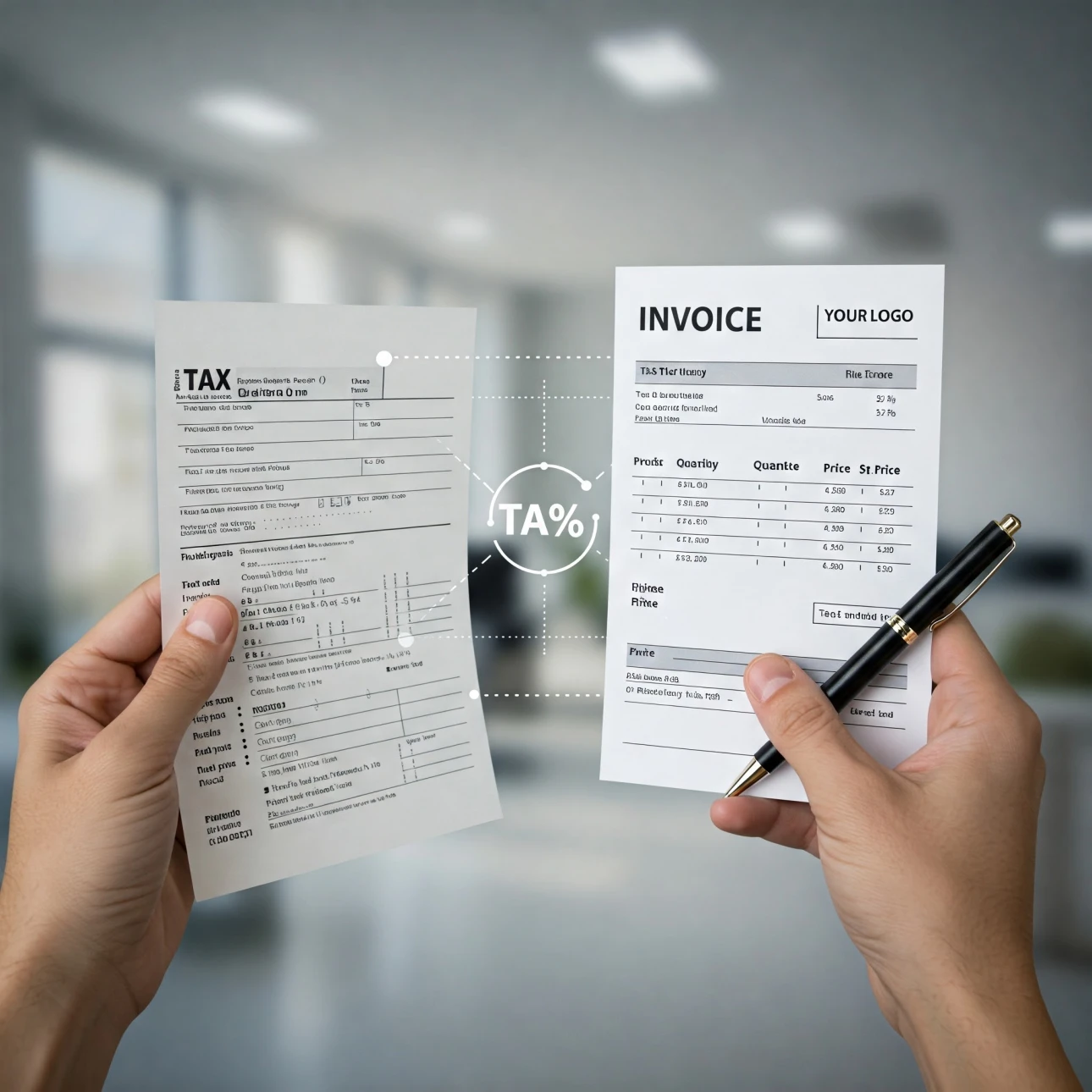
E-Invoicing Phase 2 in Saudi Arabia: How to Get Ready
As Saudi Arabia keeps pace with digital transformation and the modern electronic systems adopted by most countries around the world, this article looks at Phase 2 of e-invoicing so you can prepare for it in line with the latest direction in accounting and invoicing. The Zakat, Tax and Customs Authority (ZATCA) launched the e-invoicing system to support Saudi Vision 2030 as part of the drive to develop the Saudi economy, and there is no doubt that Kashierapp is an indispensable tool for e-invoicing in the Kingdom.
What is an e-invoice?
The first question that comes to mind is, of course, what exactly an e-invoice is. Here is a clear explanation:

- An e-invoice is one of the documents that record a sale or purchase between the seller and the buyer.
- It is an electronic document that keeps up with economic developments in the Kingdom and replaces paper invoices.
- It is generated in structured data formats that can connect directly with official bodies, such as “Customs” and “the Tax Authority”.
- It must be issued through accounting software approved by the Zakat, Tax and Customs Authority (ZATCA).
- This applies to how the invoice is received, processed and stored.
- The main purpose of the e-invoice is to document tax and financial transactions.
- It also simplifies invoicing procedures and makes them easier to monitor, limiting manipulation and errors, especially with the best accounting software, Kashierapp.
Types of e-invoices and what they must include
ZATCA recognizes exactly two types of e-invoice:
Tax invoice
A tax invoice approved by ZATCA must include the following:
- Invoice number.
- Invoice type: “Tax Invoice”.
- Issue date of the invoice.
- A QR code.
- The total price of the invoice items excluding VAT.
- The total VAT amounts applied to the invoice.
- The total invoice amount, i.e. the total of the items plus VAT.
- All of the seller's details: name, address, the business's commercial registration (CR) number and VAT registration number.
- All of the buyer's details, including name, address, CR number and VAT registration number.
- The invoice line items, each showing the quantity, unit price, VAT amount for the item, VAT rate for the item, total price excluding VAT and total price including VAT.
Simplified tax invoice
A simplified tax invoice includes several elements:
- Invoice number.
- Issue date of the invoice.
- Name of the business or store.
- Address of the business or store.
- A QR code.
- Invoice type: “Simplified Tax Invoice”.
- VAT registration number.
- All line items, showing the quantity, VAT amount, unit price and total unit price including VAT.
- Totals for the price of the invoice items excluding VAT, the VAT due on the invoice, and the invoice total, i.e. the items plus VAT.
Requirements for a business to be ready for e-invoicing Phase 2
Although preparing for Phase 2 of e-invoicing has become easy with Kashierapp, readiness depends on meeting a set of requirements:
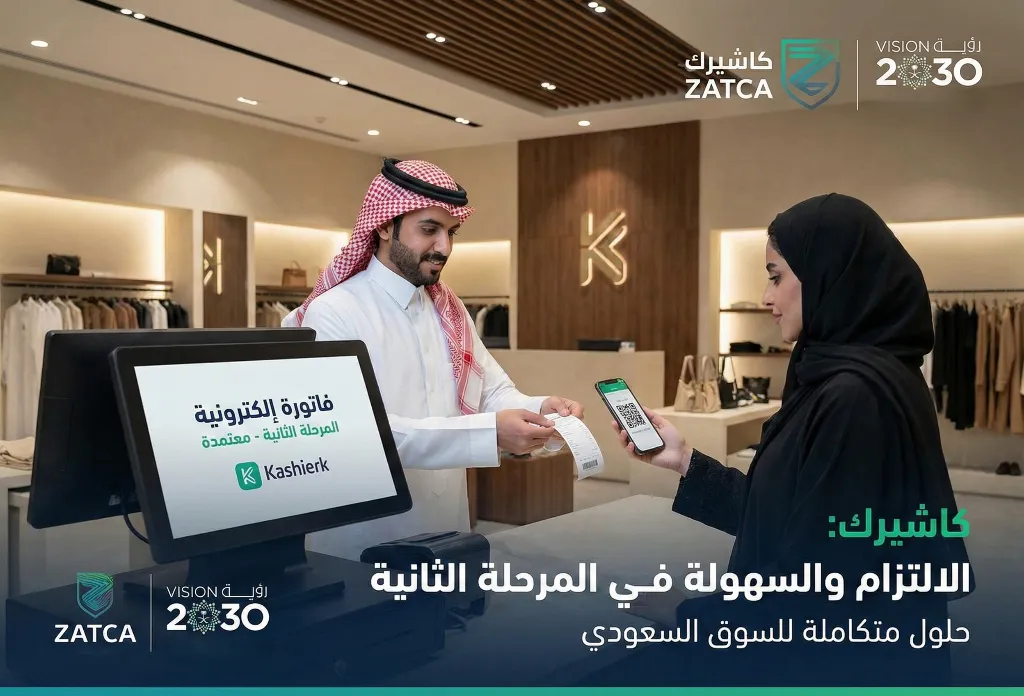
- You must adopt electronic accounting software with an invoicing system that meets all the requirements of e-invoicing Phase 2 in the Kingdom.
- Make sure the invoicing system can issue and store e-invoices in XML format, or PDF/A-3 with embedded XML, and that it includes all the required fields.
- Confirm that the accounting software and its invoicing system meet the necessary conditions, namely that it is a cloud-based system connected to the internet.
- Invoices must be connected to the platform launched by the Zakat, Tax and Customs Authority: the Fatoora platform.
- Comply with the data security rules approved in the Kingdom: every invoice must contain a QR code to ensure it cannot be tampered with.
How e-invoicing works in Phase 2
To complete the picture of e-invoicing Phase 2: as mentioned above, there are two types of approved e-invoice in the Kingdom. Here is how each one is issued:
Simplified tax invoice (business to consumer, B2C)
- First, the seller issues an e-invoice containing all the elements of a simplified tax invoice.
- The buyer then receives the invoice.
- The seller stores the invoice electronically.
- Finally, the seller shares the invoice with ZATCA through the electronic integration with the Fatoora platform.
Tax invoice (business to business, B2B)
- Here, the seller (a business) issues an e-invoice to the buyer (another business).
- The seller shares the invoice with the Zakat, Tax and Customs Authority through the electronic integration so that ZATCA can clear it and send it back to the seller once approved.
- The seller then shares the approved e-invoice with the buyer.
- Finally, the seller stores the invoice electronically.

Implementing e-invoicing Phase 2
Phase 2 of e-invoicing is known as the Integration phase, because taxpayers' e-invoicing systems must be identified and integrated with ZATCA in this phase. Here is what that involves:
- Integration requires accounting software that is approved by ZATCA, complies with the relevant standards and technical specifications, and connects to the Fatoora platform.
- Invoices must be issued in the required format, XML, a markup language used to represent exchangeable data in a structured way.
- An e-invoice can also be prepared as a PDF/A-3 file, one of the standard PDF formats, but it must contain an embedded XML file.
- The main goal of these steps is to make e-invoices easier to read and analyze.
- They also allow invoices to be processed by an automated system that ensures the data is accurate and correct, and Kashierapp is, of course, the best choice for you.
Phase 2 rollout groups in Saudi Arabia
ZATCA explained that with the start of e-invoicing Phase 2 on January 1, 2023, the rollout of e-invoicing was divided into groups, and Kashierapp supports you throughout. They are as follows:
Group 1
- Taxpayers whose annual revenue exceeds SAR 3 billion; their implementation deadline is June 30, 2023.
Group 2
- Taxpayers whose annual revenue exceeds SAR 500 million; their implementation period ends on December 31, 2023.
Group 3
- This group covers taxpayers whose annual revenue exceeds SAR 250 million, with the implementation period ending on January 31, 2024.
Group 4
- The implementation period for this group ends on February 29, 2024, and it covers taxpayers with annual revenue above SAR 150 million.
Group 5
- Taxpayers with annual revenue above SAR 100 million fall into Group 5, whose implementation period ends on March 31, 2024.
Group 6
This group covers taxpayers whose annual revenue exceeds SAR 70 million, and its implementation period ends on April 30, 2024.
Group 7
- This group includes taxpayers with annual revenue above SAR 50 million, and its implementation period will end on May 31, 2024.
Group 8
- This group covers taxpayers whose annual revenue exceeds SAR 40 million, with the implementation period ending on June 30, 2024.
Group 9
- The last group includes taxpayers whose revenue exceeds SAR 30 million, and its implementation period ends on September 30, 2024.
Note that the annual revenue in question is revenue subject to VAT, calculated on the basis of revenue for 2021 or 2022.
Frequently asked questions
How do I know when Phase 2 applies to my business?
It's very simple: ZATCA notifies every targeted group at least 6 months before Phase 2 applies to them.
Why did the Zakat, Tax and Customs Authority adopt e-invoicing?
E-invoicing brings several benefits, most notably simpler procedures, less time and effort than manual processes, fewer human errors, and better accounting and bookkeeping.
Dear reader, that concludes our guide to e-invoicing Phase 2. We have covered all the details you need to be fully prepared to implement e-invoicing with Kashierapp, the best software for meeting every requirement of an organized accounting system and for advancing digitization across the supply chain. We hope this has been a simple, clear reference.
.webp)
E-Invoicing in Saudi Arabia: A Complete Guide for Your Business
Table of contents What is an e-invoice?Why e-invoicing matters for Saudi Arabia and for businesses Types of e-invoices What are the elements of...
Read the article
Best Cashier Software in Saudi Arabia: Sales, Stock, E-Invoices
Choosing the best cashier software in Saudi Arabia is no longer a simple decision about how fast you can issue...
Read the article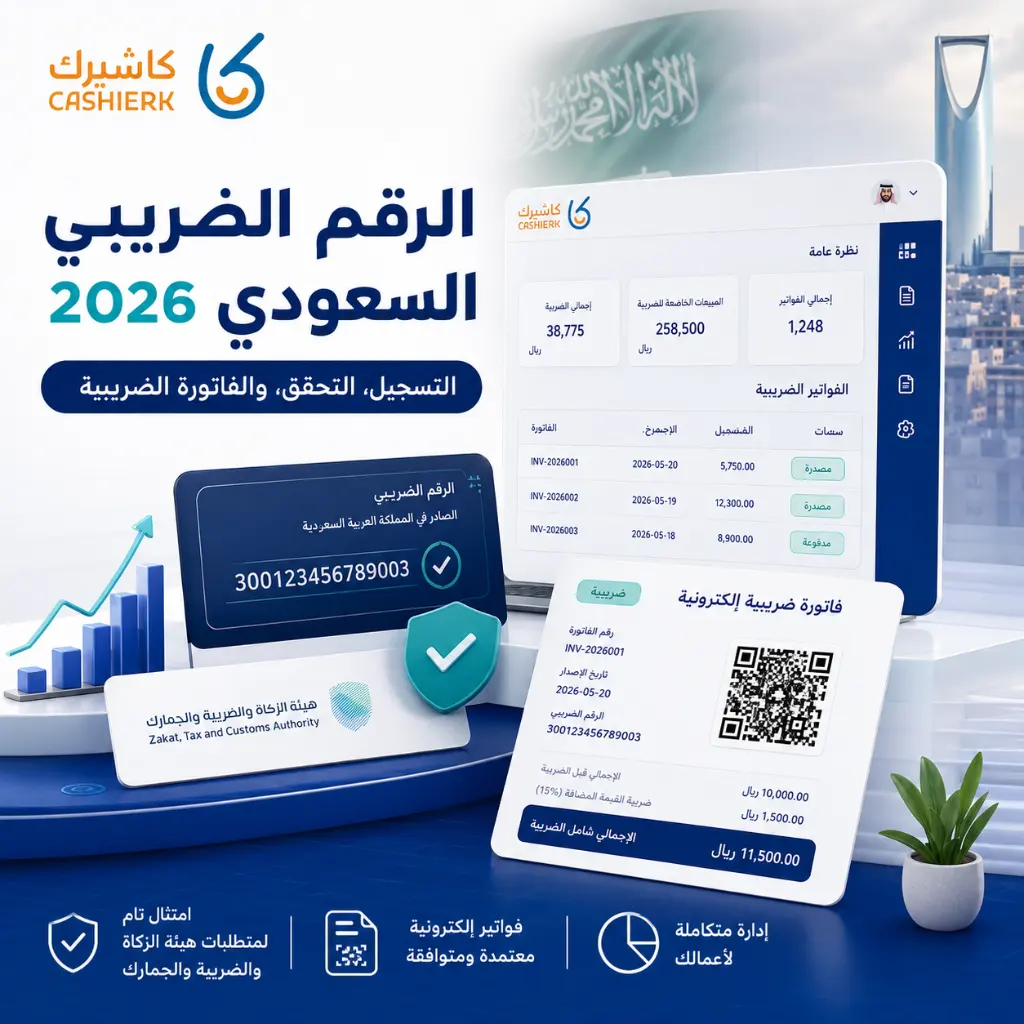
Saudi VAT Number 2026: Registration, Verification and VAT vs TIN
As tax legislation in Saudi Arabia keeps evolving, and as e-invoicing and the Integration phase with the Zakat, Tax and...
Read the article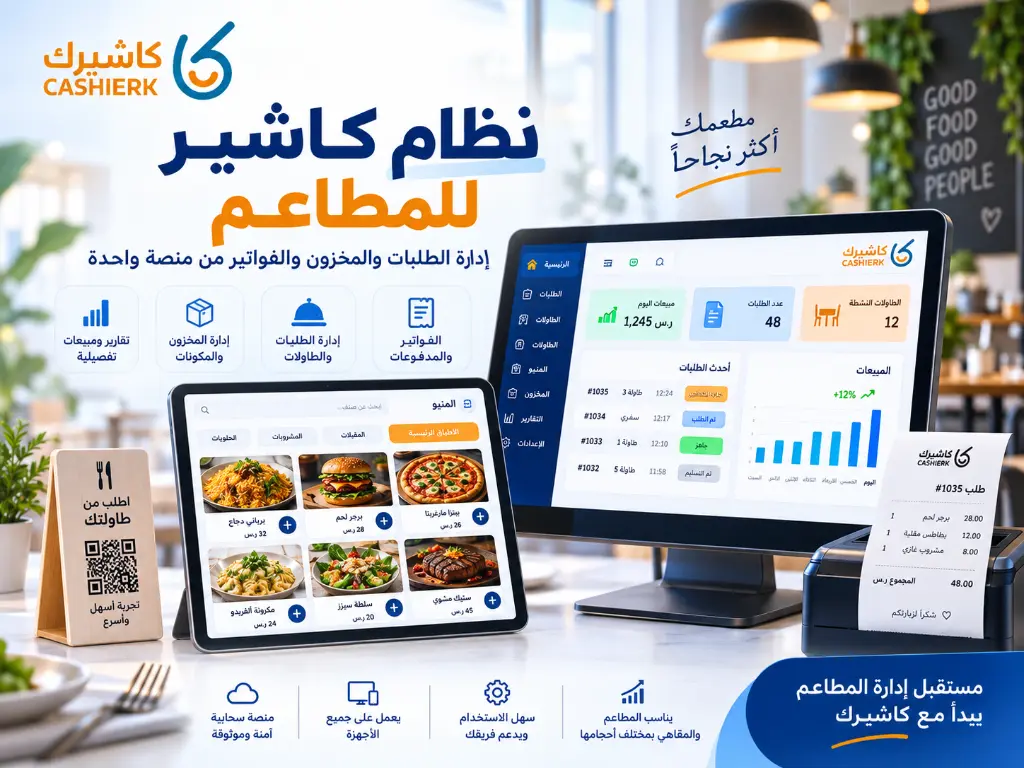
Restaurant POS System: Manage Orders, Inventory and Invoices
Running a restaurant is no longer just about great food or fast service. It now takes a clear operating system...
Read the article.webp)
Best E-Invoicing Software in Saudi Arabia
Key takeawaysKashierapp makes e-invoicing more efficient.Converting paper invoices simplifies financial operations.The software is ideal for business and store owners.It greatly...
Read the article
Saudi Tax Invoice: The Complete 2025 Guide
Key takeawaysWhat a Saudi tax invoice is and why it mattersVAT requirements in Saudi ArabiaHow to issue e-invoices step by...
Read the article Riyadh - King Fahd Road - Al Yamamah Tower, 1st Floor - Office 102

