

Saudi Tax Invoice: The Complete 2025 Guide
Key takeaways
- What a Saudi tax invoice is and why it matters
- VAT requirements in Saudi Arabia
- How to issue e-invoices step by step
- The relevant tax laws and regulations
- Best practices for managing tax invoices
What is a Saudi tax invoice?
A Saudi tax invoice is an official document issued by companies and businesses that are subject to value-added tax (VAT) in Saudi Arabia. It plays a very important role in a business's financial management.

Tax invoice definition
A tax invoice is a document that proves a sale of goods or the provision of a service. It shows the details needed for tax purposes, such as the sales value and the tax due, along with information about the supplier and the customer.
Why issuing tax invoices matters
Tax invoices matter because they prove business transactions. They also help you calculate the tax due accurately, and they are essential for complying with tax regulations and avoiding violations.
VAT requirements in Saudi Arabia
In Saudi Arabia, value-added tax (VAT) is a core part of the tax system and applies to many goods and services. Understanding its requirements is therefore essential for any company or business operating in the Saudi market.
One of the most important requirements is issuing tax invoices correctly. These invoices must comply with the rules of the Zakat, Tax and Customs Authority (ZATCA). They must also include the required details and, in some cases, may need to be issued electronically.
- Collecting VAT from customers and remitting it to ZATCA on time.
- Registering the business with ZATCA and obtaining a VAT registration number.
- Keeping accurate records and preparing periodic reports on VAT obligations for submission to the Authority.
Understanding and following tax laws is essential for companies in Saudi Arabia to stay tax compliant.
How to issue a Saudi tax invoice
Issuing a tax invoice in Saudi Arabia requires accuracy and care, and the invoice must include all the essential details. This section explains how to issue a correct tax invoice.

Mandatory invoice details
The Zakat, Tax and Customs Authority in Saudi Arabia sets out the mandatory details an invoice must contain. They include:
- The business name and address
- The business's commercial registration (CR) number
- The business's VAT registration number
- The invoice issue date
- The invoice number
- A description of the goods or services sold
- The quantity and unit price of each item
- The total amount due from the customer
- The amount of VAT applied
Ways to issue e-invoices
Today, there are several ways to issue tax invoices electronically. The main ones are:
- Using accounting and e-invoicing software such as Kashierapp, the well-known solution that handles all your accounting transactions. Software like this generally provides tools for creating and managing invoices easily.
- Using the services of approved e-invoicing solution providers, which offer end-to-end solutions.
- Developing an in-house accounting system dedicated to issuing electronic tax invoices. Such a system must comply with the regulatory requirements.
The right method depends on the size of the business and its requirements. Each method helps make invoicing more efficient.
- Create and manage invoices easily
- Track invoice history
- Send invoices electronically
- Ease of use
- Saves time and effort
- Better accuracy and organization
- Upfront software costs
- Staff need training
- Professional, end-to-end service
- Full compliance with regulatory requirements
- Ongoing technical support and maintenance
- Focus on quality and compliance
- Room for future development
- Reduced technical burden
- Monthly subscription fees
- Dependence on a third party
- Full control over the system
- Solutions tailored to the business's needs
- Integration with other systems
- Flexibility and independence
- Customized solutions
- Room for future development
- Requires technical resources
- Development and maintenance costs
Choosing the best way to issue electronic tax invoices requires a careful look at your business's needs, weighing the advantages and challenges of each method.
The Saudi tax invoice and the laws that govern it
Saudi Arabia has strict tax laws that help ensure transparency and tax compliance. These rules govern every aspect of issuing tax invoices, including the tax laws and the VAT regulations.

Tax laws and regulations in Saudi Arabia
The most important laws in Saudi Arabia include:
- The VAT Law, which sets out the technical and procedural requirements for issuing tax invoices.
- The VAT Implementing Regulations, which detail how invoices are issued and how accounting records are kept.
- Decisions of the Zakat, Tax and Customs Authority (ZATCA) on e-invoicing and invoicing controls.
These laws impose specific obligations and stress that tax invoices must meet the regulatory requirements.
Businesses in Saudi Arabia must comply with these laws to ensure their invoices meet the regulatory requirements.
Accounting and invoice management apps
In today's business world, accounting apps and invoice management tools are essential to a company's success. They make it easy to issue tax invoices in Saudi Arabia and help companies stay tax compliant.
Using the right accounting system gives companies in Saudi Arabia important advantages, such as:
- Issuing tax invoices automatically and efficiently
- Tracking sales and revenue accurately
- Managing financial and tax records easily
- Analyzing financial data to make informed decisions
Advanced invoice management also helps companies:
- Speed up invoicing
- Improve cash flow by tracking payments
- Reduce invoice-related errors and costs
- Benefit from integration with other accounting systems
FAQ about the Saudi tax invoice
What is a Saudi tax invoice?
A Saudi tax invoice is an official document issued by companies and businesses subject to VAT in Saudi Arabia. It contains information such as the sales value and the tax due.
Why is it important to issue tax invoices in Saudi Arabia?
Issuing tax invoices is essential for companies and businesses in Saudi Arabia. These invoices support tax compliance and protect the rights of both customers and suppliers.
What are the VAT requirements in Saudi Arabia?
VAT requirements include issuing correct tax invoices, keeping up-to-date tax records and filing periodic tax returns. The tax laws and regulations define the obligations that apply.
How can a Saudi tax invoice be issued?
Tax invoices can be issued in several ways, including accounting programs and specialized software. The invoice must contain the mandatory details, such as the business name and address.
Which tax laws and regulations apply to the Saudi tax invoice?
Saudi tax laws and regulations define the requirements for tax invoices. The VAT Law and the instructions issued by the Zakat, Tax and Customs Authority are the key references here.
What are the best practices for managing Saudi tax invoices?
Best practices include making sure the invoice data is accurate. Using specialized accounting software makes issuing invoices easier, and keeping up-to-date tax records is essential for ongoing compliance.
.webp)
E-Invoicing in Saudi Arabia: A Complete Guide for Your Business
Table of contents What is an e-invoice?Why e-invoicing matters for Saudi Arabia and for businesses Types of e-invoices What are the elements of...
Read the article
ZATCA E-Invoicing Phase 2 Guide: Integration Phase 2025
What is Phase 2 of e-invoicing?Phase 2 of e-invoicing is an advanced step toward digitizing financial transactions and invoices in...
Read the article
VAT Settlement at the End of the Quarter: A Step-by-Step Guide
What does VAT settlement mean?VAT settlement means adding up and calculating the difference between output tax (the VAT you collect...
Read the article
ZATCA E-Invoicing Phase 2: The Complete Guide for Businesses
The complete guide: your safe path to Phase 2 of e-invoicing in Saudi Arabia (2025)Feeling anxious about terms like “integration,”...
Read the article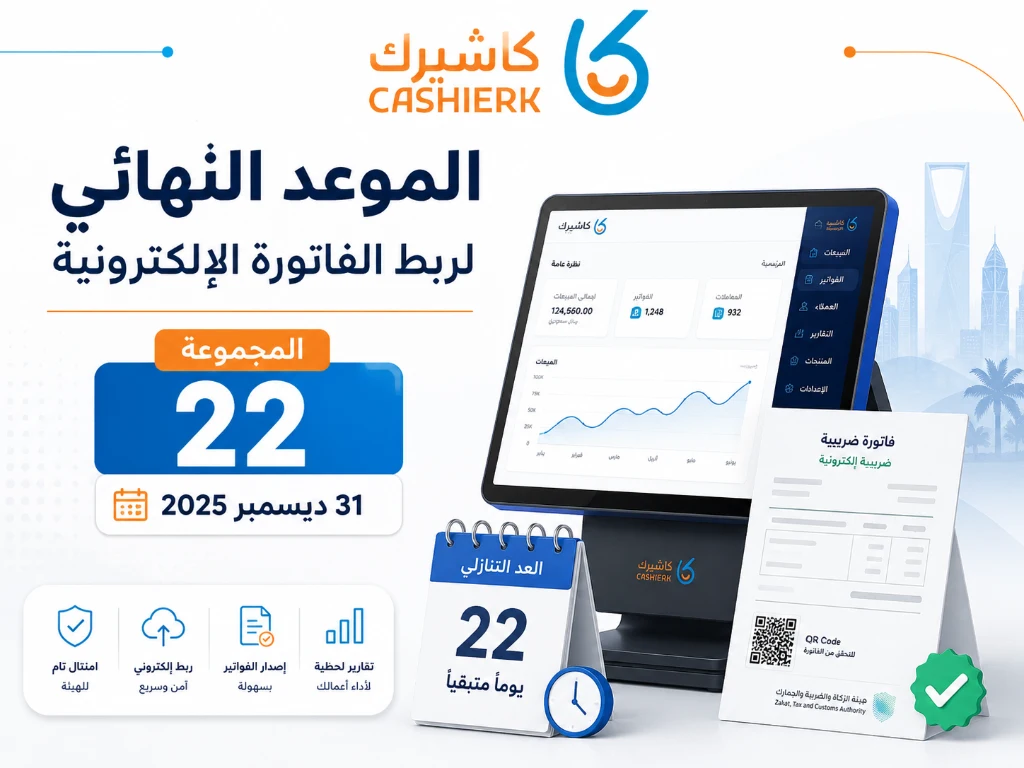
E-Invoicing Integration Deadline: What to Do If You Missed It
The Integration Phase of e-invoicing has become one of the most important operational and tax requirements for businesses in Saudi...
Read the article.webp)
The Retail Sector in Saudi Arabia and How It Is Developing
The retail sector in Saudi ArabiaSaudi Arabia is one of the largest commercial markets in the world, and its retail...
Read the article Riyadh - King Fahd Road - Al Yamamah Tower, 1st Floor - Office 102

