
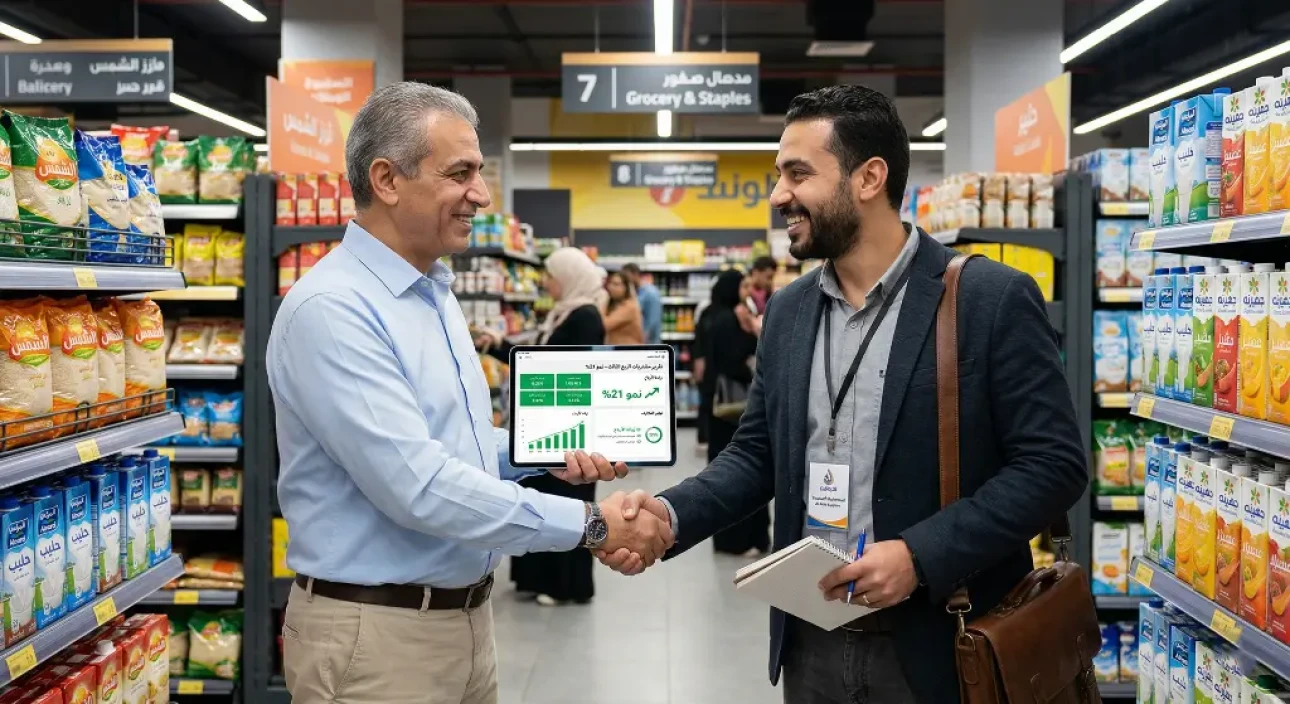
Supplier and Procurement Management: Lower Costs, Higher Profits
In the challenging world of trade, there is a golden rule that leading merchants pass down from generation to generation: “Real profit starts with smart buying, not just with selling a lot.” You can have the best location for your shop and the strongest marketing plan, but if your supplier and procurement management relies on guesswork and impulsive decisions, your profits will slip through your fingers and end up in your suppliers' pockets because of a high cost of goods sold (COGS) and a buildup of slow-moving stock.
Going from simply receiving goods to becoming a “professional negotiator” takes more than communication skills; it takes accurate data, real-time reports and full control over your purchasing cycle. In this detailed guide, we show you how to improve supplier and procurement management in your store, and how supermarket cashier software plays a central role in building strong relationships with retail suppliers, so you get the best prices and maximize your net profit.

Why is supplier and procurement management the “black hole” of retail?
Many shop owners, especially when they are starting out, put all their energy into the front of the store (customers and sales) and neglect the “back kitchen”: the purchasing cycle. This neglect leads to problems that can kill your cash flow, most notably:
- Random buying under pressure from sales reps: sales reps are experts at persuading you to buy large quantities of goods you may not need, using “wholesale deals” as the pitch. Without an inventory management system that tells you a product's real sell-through rate, you will buy goods that pile up until they spoil. (For more on this problem, see our article: [How can you avoid losses from expiry dates and spoilage?].)
- Losing control of supplier accounts (payables): buying on credit is the backbone of retail. Relying on paper ledgers to record the payments and balances for each supplier leads to calculation errors, duplicate claims and a loss of trust between you and the supplier.
- Not being able to track price changes: suppliers change their prices constantly. If you enter your goods manually without a system that compares the old cost with the new cost, you may keep selling at the old price and discover at the end of the month that you have been selling at a loss!
4 practical strategies to lower your “cost of goods sold” and build solid relationships
The goal of supplier and procurement management is not to “squeeze” suppliers and lose them, but to build a win-win relationship based on professionalism and commitment. Here is how to do it:
1. Data-driven negotiation
Suppliers respect retailers who know their numbers. When you sit down with a company's sales rep, don't speak in rough estimates. Use the reports from your supermarket cashier software to tell them: “I sold 500 cartons of your product last month, and I expect to sell 700 this month if I get an extra 3% discount.” The language of documented numbers pushes suppliers to give you their best offers, because they see you as a growing strategic partner.
2. Standardize and automate your purchase orders
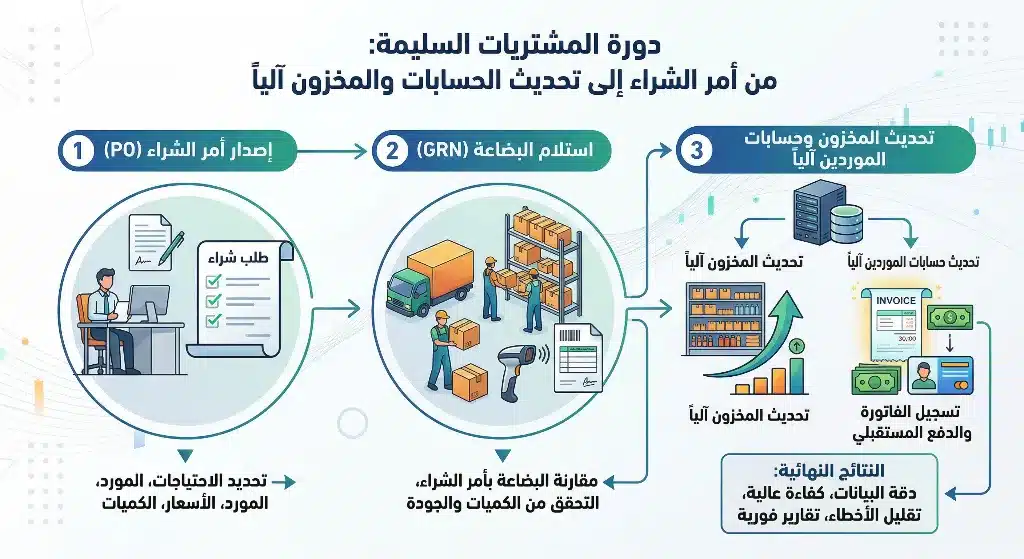
Don't rely on verbal orders or WhatsApp messages. Verbal orders cause mistakes in the agreed quantities and prices. Creating an official purchase order
in your POS system and sending it to the supplier protects your rights and makes it easy for your warehouse keeper to match the goods received against the goods ordered with complete accuracy.
3. Diversify suppliers and track their performance (Supplier Performance)
Relying on a single supplier for an item puts you at their mercy if they raise prices or deliver late. Good management means having a Plan B. You should record and categorize your retail suppliers and track their performance in terms of on-time delivery, the quality of the goods supplied and the return rate.
4. Pay on time to benefit from early payment discounts
The best way to lower your cost of goods sold is to take advantage of the early payment discount some suppliers offer (for example, a 2% discount if you pay within 10 days instead of 30). Strict financial organization of your accounts lets you keep enough cash on hand to seize these discounts, which directly increase your net profit. (You can link this to your selling strategy in our article: [The best product pricing strategies to increase profits].)
How does an advanced cashier system turn you into a professional purchasing manager?
You can't apply these advanced strategies in a supermarket or grocery store without a strong technical infrastructure. Your accounting system and supermarket cashier software are not just tools for issuing invoices to customers; they are the “mastermind” of your purchasing operations.
A technology system links sales to purchases almost like magic. When an item is about to run out, the system sends a low-stock alert so you can issue a purchase order at the right time and avoid an out-of-stock disaster that sends your customers to your competitors.
How Kashierapp gives you tight control over the purchasing cycle
If you are looking for a tool that connects your cashier, warehouse and supplier accounts on a single screen, Kashierapp is the comprehensive, integrated solution that can truly transform supplier and procurement management in your business.
How does Kashierapp make dealing with suppliers easier?
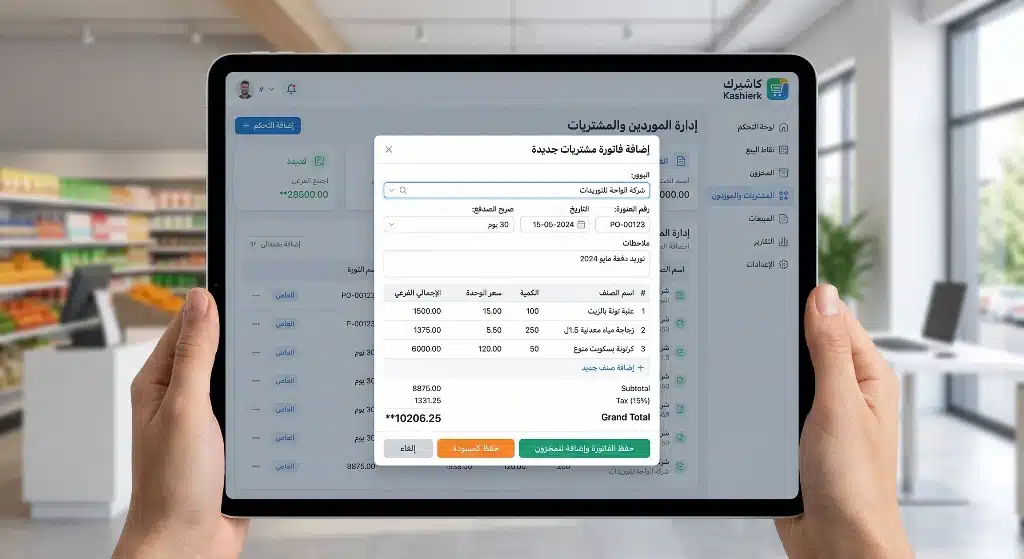
- Automated invoices and inventory updates: as soon as you enter a purchase invoice in Kashierapp, the system instantly updates your quantities in inventory management, updates the product's average cost and calculates new selling prices to protect your profit margins.
- Supplier account management (statements of account): the system gives you a dedicated file for each supplier. You can record credit purchase invoices and the cash or bank payments you have made (payment vouchers). With a single click, you can print an accurate, detailed supplier statement that settles any financial dispute between you.
- Professional handling of returns: received damaged or expired goods? No problem. Kashierapp lets you easily create a purchase return note, and the system automatically deducts the quantity from your warehouse and its value from the amount you owe the supplier at the same moment.
-
A complete purchasing cycle: from requesting quotations, to converting them into a purchase order, to receiving the goods (goods receipt note), all the way to issuing an approved purchase tax invoice that fully complies with ZATCA requirements.
Conclusion
Success in retail is a two-sided equation: smart selling to customers and even smarter buying from suppliers. Being lax about supplier and procurement management leaves deep gaps through which your cash leaks away. Building solid relationships with your suppliers requires transparency, accuracy and relying on the language of numbers.
Don't keep managing your purchases with old methods that exhaust you and cost you a lot. It is time to fully automate your purchasing cycle. Rely now on the best supermarket cashier software and discover how Kashierapp can save you thousands of riyals every month by tightening control over prices and supplier accounts, so your business can achieve sustainable financial growth and real profits.
Frequently asked questions about supplier and procurement management
How do I calculate the cost of goods sold (COGS) in a supermarket?
The simple accounting formula is: (opening inventory + purchases during the period - closing inventory). But instead of this manual hassle, Kashierapp calculates the cost of goods sold automatically with every sale at the cashier, giving you accurate net profit reports.
What is the benefit of issuing a purchase order instead of buying directly?
A purchase order (PO) is an internal document that protects you from manipulation. It records the quantities and prices agreed with the supplier in advance. When the goods arrive, the warehouse keeper matches the supplier's invoice against the purchase order in the system, so you never receive goods that weren't ordered or at prices different from those agreed.
How does cashier software help me when a supplier changes wholesale prices?
With advanced supermarket cashier software, when you enter a purchase invoice with higher-than-usual prices, the system automatically updates the product's moving average cost in your warehouse, alerting you to review and update your retail prices right away so your profits don't erode.
Can I easily track what I owe suppliers in Kashierapp?
Absolutely. Kashierapp gives you a complete module for managing supplier accounts. You can see the amounts owed to each supplier and payment due dates, and record vouchers, which saves you embarrassment and keeps your cash flow organized.
.webp)
Effective Inventory Management to Grow Your Business
What you'll learn in this article:What inventory management is and why it matters to businessesHow to use an enterprise resource...
Read the article.webp)
Cashier Software for Efficient Sales and Inventory Management
Cashier software that supports every payment method and complies with tax and zakat requirementsDetailed reports on sales and buying patternsAccurate...
Read the article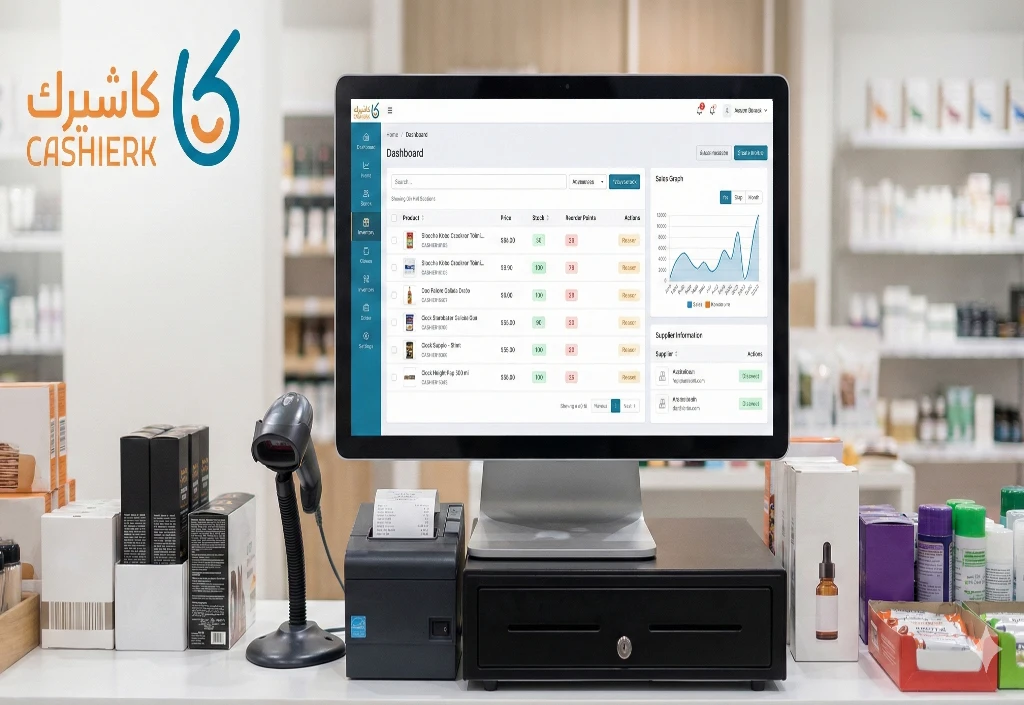
Goodbye Manual Stocktaking: How Kashierapp Simplifies Inventory
Goodbye to manual stocktaking: how does Kashierapp make inventory management smart and simple?In today's fast-moving world of commerce, inventory is...
Read the article
How to Prevent Theft and Inventory Shrinkage: 5 POS Steps
Do you know where 5% of your profits go every year? In retail and restaurants, there is a silent enemy...
Read the article Riyadh - King Fahd Road - Al Yamamah Tower, 1st Floor - Office 102

