
Management Accounting: Definition, Importance and Objectives
Management accounting is one of the most important tools for helping business owners understand how their business is really performing and make decisions based on clear figures rather than guesswork or general impressions.
It goes beyond recording financial transactions: it focuses on analyzing data, tracking costs, measuring profitability, preparing budgets, comparing actual performance with the plan, and producing internal reports that help management plan, control and make better decisions.
With the rise of cloud systems, software such as Kashierapp helps businesses bring sales, inventory, invoice and reporting data together in one place, making management accounting easier and more accurate for companies, stores, restaurants and multi-branch businesses.
Contents
- What is management accounting?
- What is the difference between management accounting and financial accounting?
- Why do companies need management accounting?
- Objectives of management accounting
- Principles of management accounting
- The main management accounting methods
- Practical examples of management accounting
- The role of management accounting in planning and control
- How does management accounting support decision-making?
- How management accounting relates to reports, inventory and sales
- How does Kashierapp help you apply management accounting?
- Common mistakes in using management accounting
- Frequently asked questions about management accounting
What is management accounting?
Management accounting is a branch of accounting that focuses on preparing internal reports and analyses that help management plan, make decisions and monitor performance.
Unlike financial accounting, which mainly produces reports for external parties such as investors or government bodies, management accounting serves the company's internal management and helps it understand the details of day-to-day operations.
Management accounting involves analyzing data such as:
- Sales.
- Costs.
- Expenses.
- Inventory.
- Profitability.
- Branch performance.
- Product performance.
- Staff performance.
- Cash flows.
- Variances between the plan and actual results.
Put simply, management accounting doesn't just ask, “How much profit did we make?”
It also asks, “Why did we make a profit? Where are we losing money? Which product performs best? Which branch needs improvement? And what should we do next?”
What is the difference between management accounting and financial accounting?
Although management accounting and financial accounting both rely on financial data, each has a different purpose.
| Criteria | Management accounting | Financial accounting |
|---|---|---|
| Purpose | Support management decision-making | Prepare financial statements for external parties |
| Users | Management, decision-makers, managers | Investors, government bodies, banks, auditors |
| Type of reports | Internal, analytical and detailed | Official and summarized |
| Timing | Can be prepared daily, weekly or monthly | Usually at the end of a financial period |
| Focus | The future, improvement and planning | Reporting the results of the past period |
| Flexibility | Flexible, shaped by management's needs | Bound by accounting standards and rules |
A practical example:
Financial accounting tells you that the restaurant made a profit at the end of the month.
Management accounting shows you which menu items generated that profit, which branches are underperforming, when the peak hours are and where operating costs have risen.
Why do companies need management accounting?
Companies need management accounting because it gives management a clearer view of what is happening inside the business. Instead of making decisions based on guesswork, management accounting provides data you can rely on.
Management accounting matters because it helps with:
- Better financial and operational planning.
- Monitoring costs and expenses.
- Identifying the most profitable products or services.
- Measuring the performance of branches and departments.
- Supporting pricing decisions.
- Better inventory management.
- Tracking variances between planned and actual results.
- Reducing waste and losses.
- Supporting management in expansion decisions.
- Improving profitability over the long term.
The more detail your business involves, such as multiple branches, many products or daily inventory, the more important it is to have a system that produces accurate reports, such as Kashierapp's Smart Reports.
Objectives of management accounting
Management accounting aims to give management the information it needs to run the business better.
1. Supporting decision-making
Management accounting provides data that helps management choose the best course of action, for example: Should we raise a product's price? Should we discontinue a particular service? Should we open a new branch? Should we stock more of a particular item?
2. Better planning
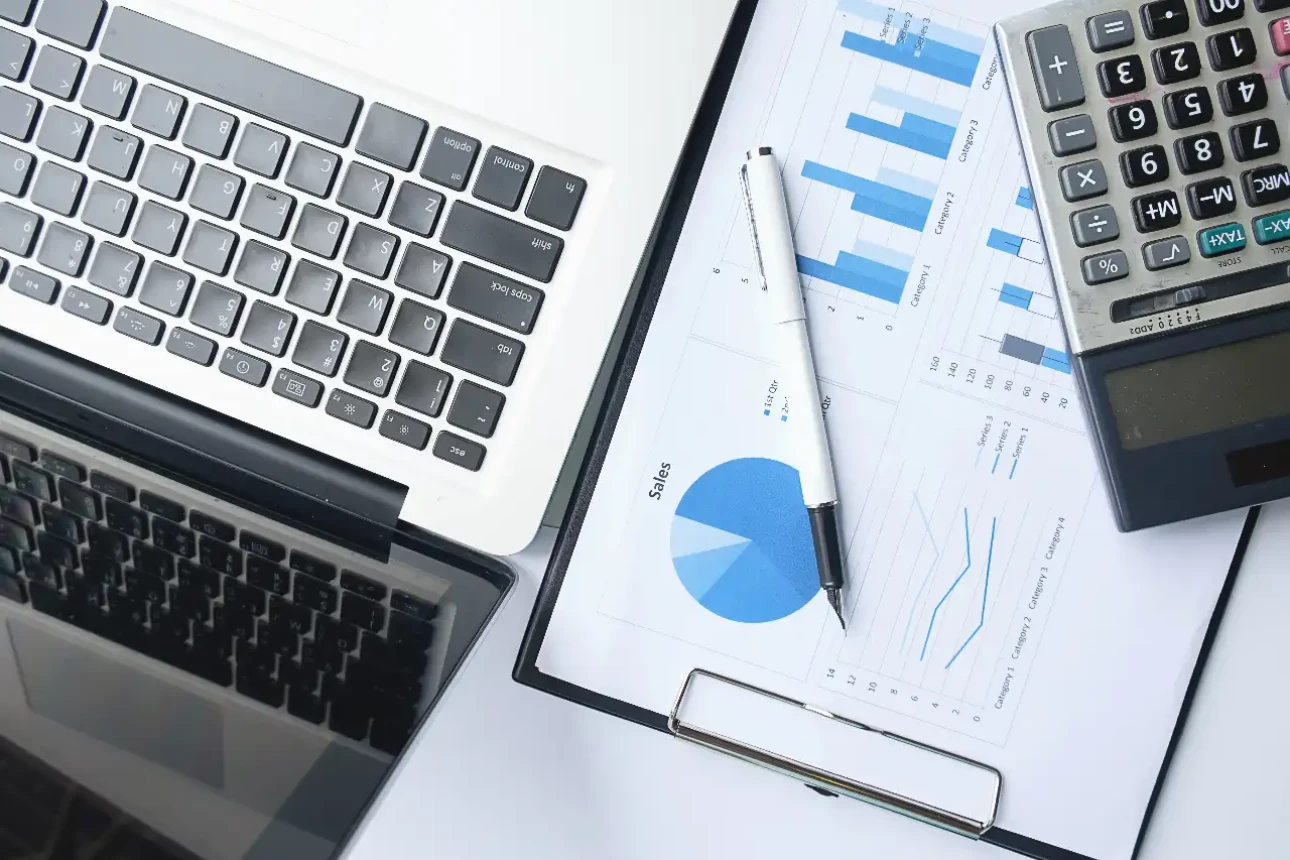
It helps management set financial and operational plans based on realistic figures, such as forecasts of sales, expenses, inventory needs and operating costs.
3. Performance control
It helps compare actual performance with the plan and shows whether the business is on the right track or needs intervention.
4. Cost management
It helps analyze direct and indirect costs and pinpoint any unjustified increase in expenses or waste.
5. Improving profitability
By identifying the most profitable products, cutting unnecessary expenses and improving pricing, management can gradually increase the profit margin.
6. Risk management
Management accounting helps detect problems early, such as falling sales, rising inventory costs, a branch's declining performance or increasing expenses.
Principles of management accounting
To be useful, management accounting must be based on a set of clear principles.
1. Relying on accurate data
Any management decision based on inaccurate data can lead to the wrong outcome. That's why sales, inventory, invoice and cost data must be organized and up to date.
2. Focusing on management's needs
Unlike financial statements, management accounting reports are not always standardized; they are designed around management's needs. A restaurant manager needs different reports from the manager of a distribution company or a retail store.
3. Comparing periods
Knowing the current sales figure isn't enough; you need to compare it with previous periods to see the trend. Are sales growing or declining?
4. Linking financial and operational data
Good decisions aren't based on money alone. Financial figures must be linked to operational elements such as inventory, orders, customers, branches and staff.
5. Delivering information quickly
The faster reports reach management, the better it can correct course before a problem gets worse.
The main management accounting methods
Management accounting uses several methods to help management understand performance and make better decisions.
1. Budgets
A budget is a financial plan that sets out the expected revenue and expenses for a given period. Budgets help management set targets and track variances.
Example:
If a company sets a monthly sales budget of SAR 200,000 and actually achieves SAR 160,000, there is a variance that needs to be analyzed.
2. Break-even analysis
The break-even point is the level of sales that covers costs with neither a profit nor a loss. This analysis shows management the minimum sales needed to keep going.
Example:
If a restaurant's monthly costs are SAR 80,000, it needs to know how much it must sell to cover these costs before it starts making a profit.
3. Cost analysis
Cost analysis shows the exact cost of a product or service, including materials, operations, labor and other expenses.
This is crucial for pricing, because a poorly calculated price can lead to high sales with little profit, or a hidden loss.
4. Variance analysis
Variance analysis means comparing actual results with the plan. If expenses are higher than expected or sales are below target, the cause is analyzed and corrective action is taken.
5. Performance reports
Performance reports help management track key indicators such as sales, profit, inventory, branches, staff and payment methods.
In practice, this is where Smart Reports come in, helping business owners track performance through clear indicators instead of scattered manual reviews.
Practical examples of management accounting
Management accounting becomes much clearer when we link it to real-life examples.
Example 1: A restaurant that wants to know its most profitable menu items
A particular dish may be the best seller but not the most profitable because its ingredients are expensive. Management accounting helps compare sales with costs to reveal the true profitability.
Possible decision:
Adjust the price, reduce waste, change the supplier or rework the portion size.
Example 2: A store with slow-moving stock
If a product hasn't moved for a while, capital is tied up in inventory. Management accounting helps spot slow-moving items through sales and inventory reports.
Possible decision:
Run a promotion, reorder less of the product, or replace it with a faster-moving one.
Example 3: A company with several branches
Total sales may look good, but analyzing each branch may reveal that one is performing poorly. Management accounting helps evaluate each branch on its own.
Possible decision:
Review the team, change opening hours, improve promotions or reassess the branch's location.
Example 4: A business setting the price of a new product
Before launching a new product, management needs to know the product's cost, the required profit margin, competitors' prices and what customers are willing to pay.
Management accounting helps build a more accurate pricing decision instead of relying on guesswork.
The role of management accounting in planning and control
Management accounting helps management in two key stages: planning and control.
Planning
In the planning stage, management uses data to set targets and forecasts, such as:
- Next month's sales.
- The expense budget.
- Inventory needs.
- The number of staff required.
- The promotions plan.
- The target for each branch.
Control
In the control stage, actual results are compared with the plan. If there is a clear gap, the cause is analyzed.
Example:
If inventory costs are higher than expected, the cause may be higher supplier prices, wasteful usage, stocktaking errors or poor oversight of purchasing.
This is where management accounting helps you pinpoint the problem instead of simply noticing that expenses have gone up.
How does management accounting support decision-making?
Good management decisions need clear data. Management accounting helps answer important questions such as:
- Is the product profitable, or does it just generate sales?
- Should we raise the price or cut the cost?
- Does the current branch need development, or should it close?
- Is current inventory right for the level of demand?
- Did the discount campaign deliver real results?
- Do we need to hire more staff?
- Should we open a new branch?
- Should we discontinue a particular product or service?
- Should we change our current supplier?
These questions can't be answered accurately from total sales alone. Management needs detailed reports that connect sales, costs, inventory, branches and customers.
How management accounting relates to reports, inventory and sales
Management accounting relies on daily operational data. The better organized your sales, inventory and invoice data, the more accurate your management analysis becomes.
Sales
Sales data shows the level of demand, the best-performing products, peak hours and the average invoice value.
Inventory
Inventory data shows which items are running short, which products are slow-moving, the cost of storage and potential waste.
See our Smart Inventory Management page to learn how organized inventory leads to better operational decisions.
Invoices
Invoices help organize revenue, taxes, payments and returns, making your financial data clearer.
Kashierapp invoicing software and e-invoicing pages to learn how invoices help organize financial operations.
Branches
For a multi-branch business, management accounting helps compare each branch's performance and identify growth opportunities and operational problems.
How does Kashierapp help you apply management accounting?
Kashierapp doesn't replace your accountant or finance manager, but it helps your business produce organized operational data that can be used for management accounting and decision-making.
1. Collecting sales data from the point of sale
With the smart POS system, sales are recorded and linked to invoices and reports, providing a clear source of daily revenue data.
2. Linking sales to inventory
When sales are linked to inventory, management can understand product movement, slow-moving items and products that need reordering.
3. Reports that help analyze performance
Reports give management the data to track sales, branches, products and payment methods, supporting decisions on pricing, promotions and expansion.
4. Support for branch management
If you have more than one branch, Kashierapp helps you track each branch separately and compare performance across branches from a single dashboard.
See the Advanced Branch Management page to learn more.
5. Organizing invoices and payments
Organized invoices and payments give your accountant and management clearer financial data and reduce reliance on manual compilation.
6. Supporting operational decisions
When you bring together sales, inventory, invoice and report data, management gets a better view that helps it improve profitability and reduce errors.
Common mistakes in using management accounting
1. Relying on outdated figures
If the data is old, decisions based on it may not suit the current situation.
2. Focusing only on sales
Higher sales don't always mean higher profit. You need to analyze cost, margin, returns and inventory.
3. Ignoring inventory
Inventory directly affects profitability and liquidity. Ignoring it can lead to overstock, shortages or waste.
4. Not comparing performance with previous periods
You can't tell whether things are improving or declining without monthly, weekly or annual comparisons.
5. Using separate, disconnected tools
Using one program for sales, a spreadsheet for inventory and separate software for invoices can lead to conflicting data and make analysis difficult.
6. Not turning reports into decisions
Reports alone aren't enough. The real value comes when the numbers turn into decisions: adjusting prices, improving purchasing, changing promotions or developing a branch.
A quick summary of the key management accounting tools
| Tool | Purpose | Practical example |
|---|---|---|
| Budgets | Planning revenue and expenses | Setting a sales target for the month |
| Cost analysis | Knowing the cost of a product or service | Calculating the cost of a restaurant dish |
| Break-even point | Knowing the minimum needed to cover costs | Setting the sales needed to avoid a loss |
| Variance analysis | Comparing actual with planned results | Spotting rising expenses |
| Performance reports | Tracking business indicators | Comparing branch sales |
| Inventory analysis | Reducing waste and overstock | Identifying slow-moving products |
Frequently asked questions about management accounting
What is management accounting?
Management accounting is a branch of accounting that focuses on preparing internal reports and analyses that help management plan, control and make decisions.
What is the difference between management accounting and financial accounting?
Financial accounting is concerned with preparing official reports for external parties, while management accounting is concerned with internal reports that help management improve performance and make better decisions.
What are the objectives of management accounting?
The main objectives of management accounting are supporting decision-making, better planning, performance control, cost management, reducing losses and improving profitability.
What are the main management accounting methods?
The best-known management accounting methods are budgets, cost analysis, break-even analysis, variance analysis and performance reports.
Is management accounting suitable for small businesses?
Yes. Management accounting is important for small businesses because it helps the owner understand sales, costs and inventory and make better decisions from the start.
Does cloud accounting software help with management accounting?
Yes. Accounting software and cloud systems help collect data and organize reports, making analysis and decision-making easier and faster.
Is Kashierapp management accounting software?
Kashierapp is a platform for managing sales, POS, invoices, inventory and reports. It helps provide organized data that can be used for management accounting and performance analysis.
How does management accounting help with pricing?
Management accounting helps with pricing by analyzing the cost of the product or service, calculating the profit margin, comparing prices with the market and setting the right price to stay profitable.
How does management accounting relate to inventory?
Management accounting uses inventory data to analyze product movement, spot slow-moving items, reduce waste and improve purchasing decisions.
Start analyzing your business performance clearly with Kashierapp
Management accounting helps you turn numbers into decisions, but the quality of those decisions depends on accurate daily data: sales, invoices, inventory, customers, branches and reports.
With Kashierapp, you can organize your business data on a single platform that helps you track performance and see what's happening in your business more clearly, whether you run a company, an establishment, a store, a restaurant or a multi-branch business.
Get started now by contacting the Kashierapp team
and choose the right solution for your business.

What Is Kashierapp? Cloud Cashier Software and Its Key Features
Kashierapp cashier softwareCashier software (a point of sale (POS) system ) is one of the essential tools for managing sales...
Read the article
What Is Kashierapp? A Guide to POS and Cloud Point of Sale
A cashier system is no longer just a device for taking payments or printing receipts in a shop. Today, the...
Read the article
Best Cashier Software in Saudi Arabia: Sales, Stock, E-Invoices
Choosing the best cashier software in Saudi Arabia is no longer a simple decision about how fast you can issue...
Read the article
Saudi VAT Number 2026: Registration, Verification and VAT vs TIN
As tax legislation in Saudi Arabia keeps evolving, and as e-invoicing and the Integration phase with the Zakat, Tax and...
Read the article
What Is a Cashier System? Types, Benefits and Kashierapp's Role
In modern commerce, a cashier system is no longer just a way to collect payments or print receipts; it has...
Read the article.webp)
Effective Inventory Management to Grow Your Business
What you'll learn in this article:What inventory management is and why it matters to businessesHow to use an enterprise resource...
Read the article Riyadh - King Fahd Road - Al Yamamah Tower, 1st Floor - Office 102

