

Financial Accounting: A Complete Guide for Your Business
What is financial accounting?
Financial accounting is the process of recording, classifying and summarizing a company's financial transactions (see also: Simplified Financial Accounting) to produce accurate financial reports that give a clear picture of the company's financial performance. These reports include the balance sheet, the income statement and the cash flow statement, and stakeholders such as investors, creditors and management use them to make informed decisions.
Why financial accounting matters
Accurate information: financial accounting provides accurate data on the company's financial position.
Easier decision-making: by analyzing financial reports, management can identify strengths and weaknesses.
Legal compliance: financial accounting ensures the company complies with tax laws and regulations.
Better operational efficiency: with tools such as invoicing software, accounting processes can be simplified and errors reduced.
Types of financial accounting
Accounting is not a single field but a set of disciplines that serve different purposes in the business world. Each type of accounting has a specific role and its own importance. Here is a detailed look at the main types:
1. Financial accounting
What is financial accounting?
Financial accounting is the most common type of accounting. It focuses on recording, classifying and summarizing the company's financial transactions and produces financial statements such as the balance sheet, the income statement and the cash flow statement.
Why it matters:
It provides accurate financial information to external stakeholders such as investors and creditors.
It helps evaluate the company's financial performance.
It is used to comply with tax laws and regulations.
A practical example:
When a company publishes its annual report, it relies on financial accounting to present accurate data on its revenue and expenses.
2. Managerial accounting
What is managerial accounting?
It provides financial information to the company's internal management to help it make strategic decisions. This information includes cost analysis, budgets and financial forecasts.
Why it matters:
It helps management plan and control operations.
It provides insight into profitability and operational efficiency.
It is used to analyze costs and make pricing decisions.
A practical example:
When a company wants to launch a new product, it uses managerial accounting to estimate the expected costs and potential profits.
3. Tax accounting
What is tax accounting?
It focuses on preparing tax returns and complying with tax laws, including calculating the taxes due and taking advantage of tax exemptions.
Why it matters:
It ensures compliance with tax laws and helps avoid penalties.
It improves the company's tax position by taking advantage of deductions and exemptions.
It provides accurate data to the tax authorities.
A practical example:
When a company prepares its annual tax return, it relies on tax accounting to calculate the taxes due accurately.

4. Government accounting
What is government accounting?
It is used in government institutions to track revenue and public spending, with a focus on transparency and accountability in managing public funds.
Why it matters:
It ensures public funds are used effectively and transparently.
It provides accurate financial reports to oversight bodies.
It helps governments with financial planning.
A practical example:
When the Ministry of Finance prepares the state's general budget, it relies on government accounting to track spending and revenue.
5. Cost accounting
What is cost accounting?
It focuses on analyzing the costs of producing goods or services, including calculating fixed and variable costs and determining the cost per unit.
Why it matters:
It helps determine production costs and make pricing decisions.
It improves operational efficiency through cost analysis.
It provides accurate data for assessing profitability.
A practical example:
When a manufacturing company wants to reduce production costs, it uses cost accounting to identify the areas that can be improved.
6. Forensic accounting
What is forensic accounting?
It is used to detect financial fraud and investigate financial crimes, relying on the analysis of financial data to uncover any irregularities.
Why it matters:
It detects financial fraud and embezzlement.
It provides financial evidence in legal cases.
It ensures transparency and integrity in financial operations.
A practical example:
When a company suspects embezzlement, a forensic accountant is appointed to investigate.
7. Auditing
What is auditing?
It involves reviewing the company's financial records to verify that they are accurate and comply with laws and accounting standards. Audits can be internal or external.
Why it matters:
It ensures the accuracy of financial reports.
It builds the trust of investors and stakeholders.
It detects financial errors or irregularities.
A practical example:
When a company appoints an external auditor to review its annual accounts, it is using auditing.
8. Social accounting
What is social accounting?
It focuses on measuring the company's social and environmental impact, including assessing its responsibility toward society and the environment.
Why it matters:
It enhances the company's reputation by demonstrating its social responsibility.
It provides reports on the company's environmental impact.
It attracts investors who care about responsible investing.
A practical example:
When a company publishes a report on its environmental initiatives, it relies on social accounting to assess the impact.
9. International accounting
What is international accounting?
It is used by companies that operate in more than one country and deal with different accounting standards. It includes currency conversion and compliance with international laws.
Why it matters:
It provides financial reports that comply with international standards.
It facilitates cross-border financial operations.
It improves transparency in multinational companies.
A practical example:
When a global company prepares consolidated financial reports for its branches in different countries, it relies on international accounting.
10. E-accounting
What is e-accounting?
It involves using software and modern technology to manage accounting processes, including issuing e-invoices and tracking payments online.
Why it matters:
It saves time and effort by automating processes.
It reduces human error in data entry.
It improves the efficiency of financial operations.
A practical example:
When a company uses invoicing software to issue invoices and track payments, it is relying on e-accounting.

How to improve accounting processes with invoicing software
As technology evolves, accounting tools such as invoicing software have become indispensable for managing financial operations. Here are some of the main advantages of using them:
Saves time: Kashierapp's invoicing software automates manual tasks such as issuing invoices and tracking payments.
Fewer errors: relying on software reduces human error in data entry.
Easy invoice management: you can create and edit invoices quickly, which improves work efficiency.
Accurate financial reports: invoicing software provides detailed reports that help you analyze financial performance.
How do you choose the best invoicing software for your company?
When choosing invoicing software, consider the following factors:
Ease of use: a simple user interface makes the software easy to work with.
Integration with other systems: make sure the software is compatible with other accounting systems.
Custom reports: the software should be able to generate reports that meet your company's needs.
Security: make sure the software provides strong protection for financial data.

Cashier Systems and Financial Accounting: 7 Strategies for Growth
Financial accounting: how it supports cloud cashier systems in Saudi ArabiaIn this article, we cover the following topics: 1 / What...
Read the article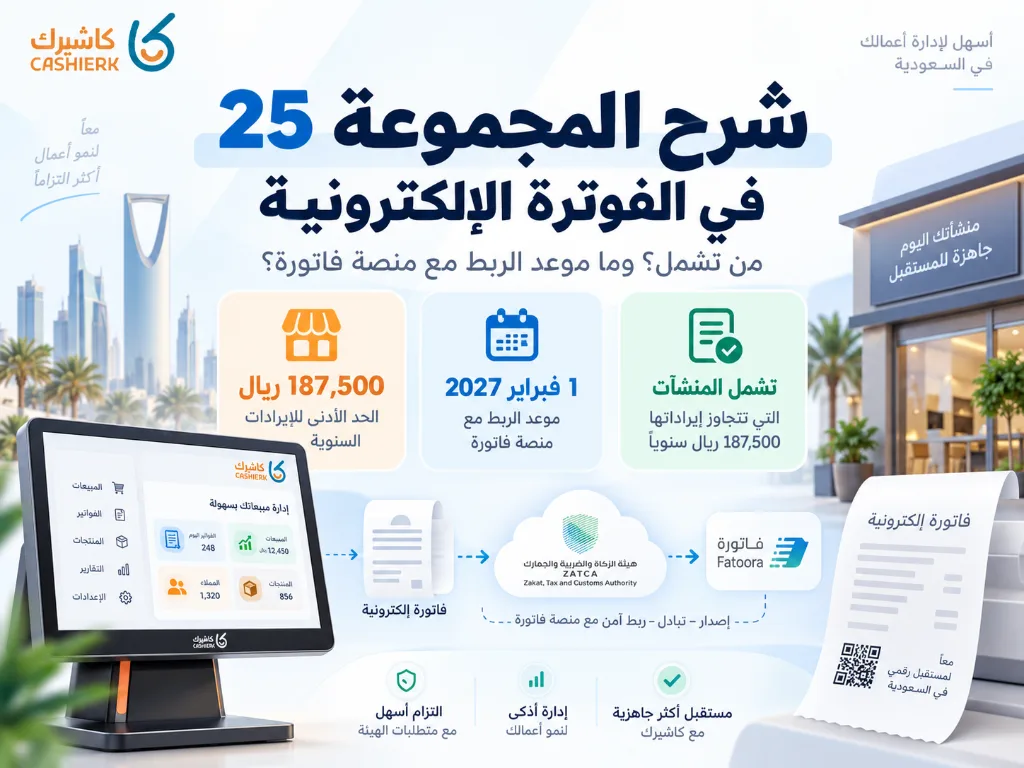
ZATCA E-Invoicing Wave 25: Who's Included and When to Integrate
The Zakat, Tax and Customs Authority (ZATCA) has announced the criterion for selecting the businesses targeted in e-invoicing Wave 25,...
Read the article
Cashier Software: The Easy Way to Boost Your Profits
Key takeaways from this articleCashier software helps you manage your store more efficientlyUsing cashier software leads to higher profitsChoosing the...
Read the article.webp)
Integrated Accounting Software for Saudi Businesses
Key highlightsIntegrated accounting software that meets the needs of Saudi companiesA look at the main advantages of accounting softwareThe core...
Read the article
Journal Entries: A Practical Guide to Recording Transactions
Journal entries: a practical guide to recording financial transactions and preparing reportsJournal entries are the foundation on which every business...
Read the article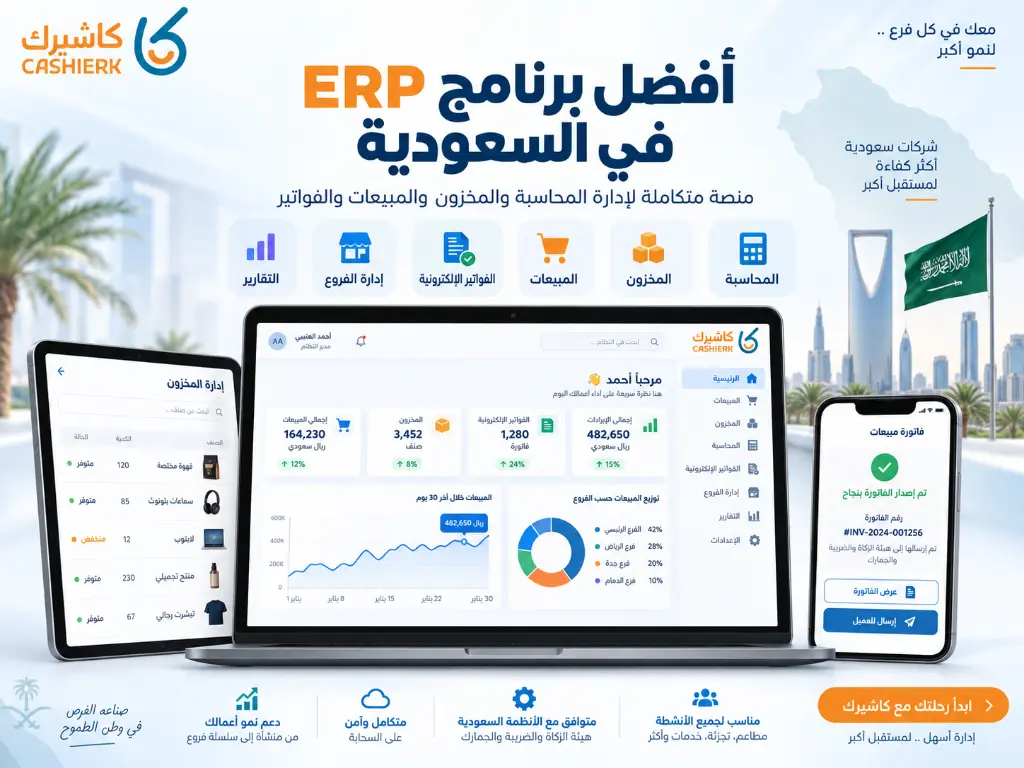
Best ERP Software in Saudi Arabia: Business, Sales and Branches
Searching for the best ERP software in Saudi Arabia has become an essential step for any company or organization that...
Read the article Riyadh - King Fahd Road - Al Yamamah Tower, 1st Floor - Office 102

